Objective:
- To share experience and practice of running a programme to support entrepreneurial refugees so enterprise colleagues from other institutions can learn from the experience at Nottingham Trent University.
- This a case study/toolkit is intended to provide insights around the scope, impact and need for training programmes to support refugee communities.
Overview:
- The programme provides simple tools to help refugees navigate the complexities of starting a business in the UK.
- Participants may have been self-employed in their home countries, so may already have skills, knowledge and expertise.
- Group of 15 refugees recruited via a partner organisation (at NTU we worked with Nottingham & Nottinghamshire Refugee Forum).
- Information on background, experience, business idea provided in advance.
- Weekly workshops over 8 weeks.
- Celebration event follows in week 9 which includes presentations of certificates to mark completion of the programme – important to celebrate successes!
- Suggest 30-minutegroup lunch followed by 2-hour workshop each week.
- 1:1s with participants who want support to take their ideas to next stage can be offered.
- Participants are likely to be from Middle Eastern countries – Afghanistan, Iran, Iraq, Syria, and be in the UK through a resettlement scheme.
- Important to be mindful of why refugees are in the UK and to respect personal circumstances.
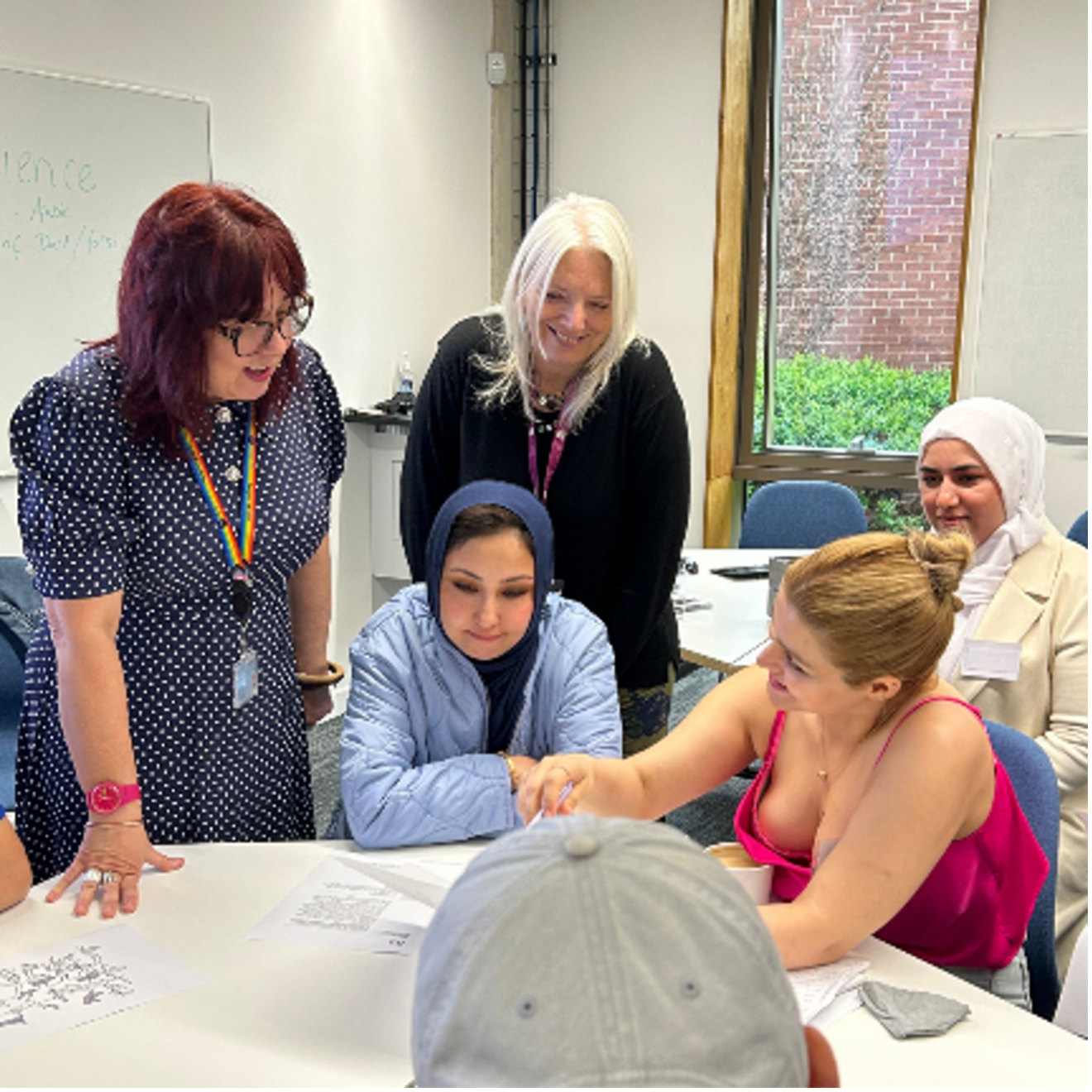
- Helpful if you can work with a partner organisation (we were supported by Nottingham & Nottinghamshire Refugee Forum). They provided an experienced employability worker who came each week and supported thegroup – wrap around support often needed due to issues that may arise related to participants circumstances.
- Interpreters in various languages may be required – e.g. Farsi, Arabic, Pashto.
- Programme design must be flexible, responsive and adaptive. Highly bespoke design needed to tailor to the group’s needs, Materials should be accessible and able to be translated in relevant languages
- Important to develop rapport with interpreters – providing materials in advance so can be translated if needed.
- Pace must be slow and simple.
- Provide case study examples of refugee businesses – we invited someone from the previous programme to come and talk. Proved to be a valuable Q&A.
- Sessions covered start-up topics such as: idea generation, value proposition, business registration, elevator pitch, resilience, customers, marketing, funding.
- Follow up after programme (3-6 months) to assess if entrepreneurial skills used in a job or business context.
- Communication via WhatApp to the group – not keen on email. Translate messages.
- Be mindful that participants may not want (or be allowed) to have photos taken due to circumstances of resettlement in UK
Activity:(Potentially long – if including timings; approach; extensions; assessment; options for delivery)
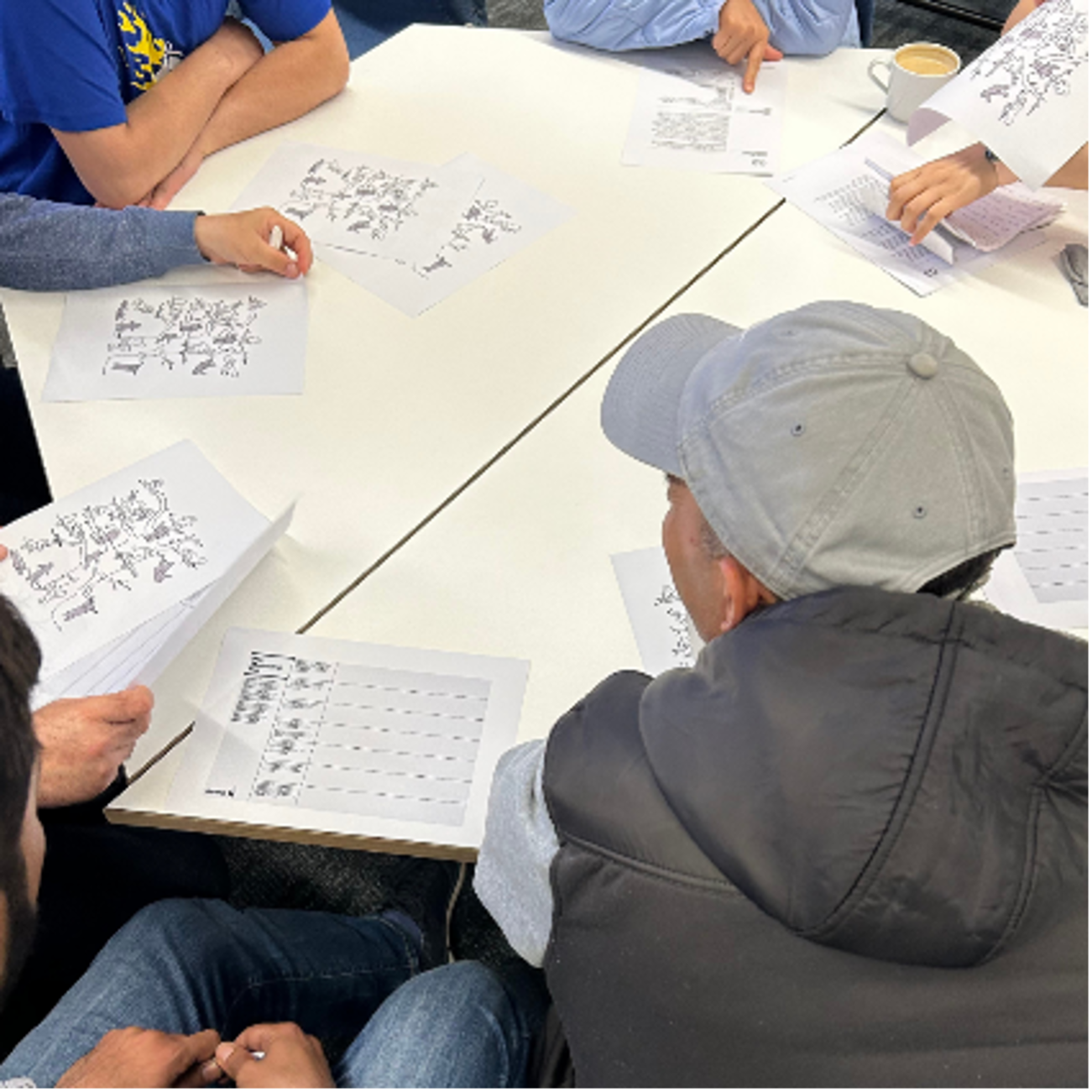
- Activities to be as fun and interactive as possible. Participants will respond better if they are engaged and enjoying themselves – more likely to learn. Lots of examples and images.
- All activities group based – important to engender a sense of community within in the group.
- Cultural differences may mean that men and women naturally sit separately, but mixing up the dynamic is a good way of developing connection between participants.
Skill Development:(short – focus on reflection; review; feedback; learning)
- Focus on development of key business skills
- Understanding basics of starting a business – how to do it legally in the UK
- Reflection and review throughout sessions – pausing to check understanding.
- Time for discussion and questioning
Resources:
- Interpreters in relevant languages
- Room set out in cabaret style with digital projection facilities and whiteboards
- A space where participants can stand openly to do a group exercise
- PowerPoint presentation (for each session) outlining key activities aligned to business start-up topics
- Note pads and pens for participants to make their own notes
- Post-its
- White Board pens
- Refreshments and lunch supported a community atmosphere (all food Halal)
- Workshop aids included Emoji cards (used in week one to demonstrate how they were feeling), visual coaching cards, Jelly Baby Treecoaching handout.
References:
Nottingham Trent University, NTU Enterprise
Other useful information and resources:
- Centre for Entrepreneurs, UK refugee entrepreneurship pilot scheme
- EEUK Case Study: Greenwich, Facilitating Entrepreneurship: Refugees and Migrants
- Impact, Entrepreneurship And Empowerment - How Business Schools Are Helping Refugees
- Transforming from Refugees to Entrepreneurs in Britain: https://www.ejbmr.org/index.php/ejbmr/article/view/649
- University of Leeds, A Better Future? Understanding Refugee Entrepreneurship
- Refugee Entrepreneurship Network
- TERN, supporting refugees to start their own business.